Beyond Minecraft: Why Subnautica's Open-World Survival is a Must-Play
For years, Minecraft has stood as the undisputed king of open-world survival crafting, inspiring countless imitators and carving out a unique niche in gaming history. But what if the familiar landscapes of blocks and plains were replaced by something far more alien, mysterious, and terrifying? Enter Subnautica, a groundbreaking title from Unknown Worlds Entertainment that takes the survival genre to exhilarating new depths. Often lauded by reviewers as an "aquatic Minecraft," Subnautica transcends simple comparison, offering a narrative-rich, intensely atmospheric, and profoundly challenging experience that every survival enthusiast simply *must* play. If you're looking to dive deep into a world unlike any other, understanding what makes Subnautica tick, perhaps with a little help from the extensive Subnautica Wiki, is your first step.
Dive into an Uncharted Alien Ocean: Subnautica's World of 4546B
Imagine this: You are Ryley Robinson, a non-essential systems maintenance chief on the interstellar spacecraft Aurora. Your mission, spearheaded by the enigmatic Alterra Corporation, is to develop high-speed space travel infrastructure in a faraway system. Unbeknownst to much of the crew, the Aurora also carried a secondary objective: to search for survivors of a previous Alterra vessel, the Degasi, which crashed on planet 4546B a decade prior. As fate would have it, the Aurora suffers its own catastrophic demise, struck by a mysterious energy pulse as it slingshots around 4546B. You awaken in an escape pod, the sole survivor, staring out at an endless, cobalt-blue expanse. Welcome to 4546B – a world almost entirely covered by a vast, alien ocean.
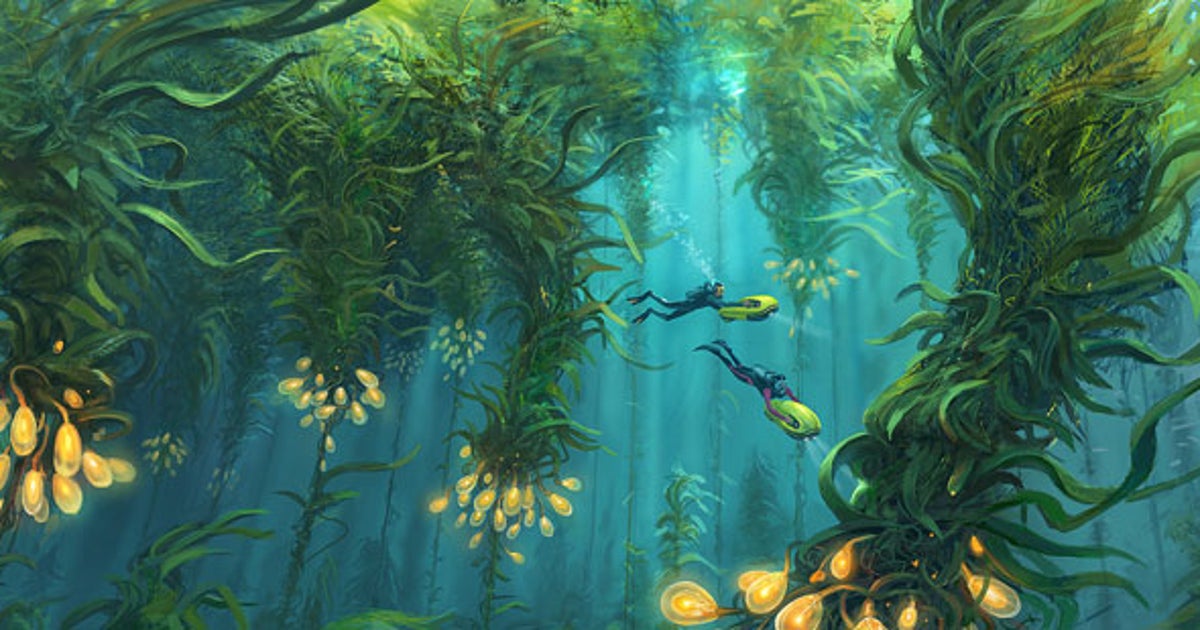
This setting is Subnautica's first masterstroke. Unlike most open-world survival games that place you on terrestrial landmasses, 4546B is an aquatic labyrinth. From the shimmering, shallow reefs teeming with passive life to the crushing, lightless abysses that harbor ancient horrors, every biome presents unique challenges and breathtaking vistas. The first-person perspective intensifies this immersion, making you feel truly vulnerable and small in an immense, unpredictable ecosystem. The day-and-night cycle further affects visibility and atmosphere, transforming familiar areas into eerie, shadow-filled unknowns after sunset. While there are two uncharted islands to discover, the vast majority of your journey will unfold beneath the waves, pushing the boundaries of underwater exploration in gaming.
The initial premise hooks you, but the deep lore surrounding the Aurora, the Degasi, and the planet itself drives an irresistible urge to explore. You're not just surviving; you're unravelling a cosmic mystery, piecing together clues left by past expeditions, and ultimately, seeking a way off this beautiful yet treacherous planet.
More Than Just Crafting: The Heart of Subnautica Gameplay
At its core, Subnautica is a survival action-adventure game, meaning your ability to gather, craft, and build is paramount. But here, crafting isn't just about making aesthetic structures; it's about survival, progression, and unlocking new frontiers. From basic tools to sophisticated submersibles and sprawling underwater habitats, every crafted item serves a vital purpose.
- Resource Management: You'll constantly be scanning your environment for raw materials like copper, titanium, quartz, and various organic compounds. These aren't just found; they're often hidden in dangerous caves or guarded by aggressive creatures.
- Essential Gear: Your first priorities involve crafting bigger oxygen tanks, fins for faster swimming, and a trusty scanner to identify new lifeforms and resources. As you venture deeper, you'll need rebreathers, reinforced dive suits, and advanced tools.
- Base Building: Establishing underwater settlements (habitats) is crucial. These provide oxygen, storage, crafting stations, and safety from the planet's many dangers. Strategic placement can create a network of safe zones across the vast ocean.
- Vehicle Progression: Exploration is limited without proper transportation. Your journey will see you progress from the agile Seamoth submersible, perfect for shallower depths, to the massive mobile base of the Cyclops, and finally, the versatile PRAWN Suit, capable of deep-sea mining and navigating extreme pressures. Each vehicle is not just a mode of transport but an extension of your survival capabilities, upgradeable with defensive, offensive, and utility modules.
Unlike Minecraft's largely freeform creative building, Subnautica's crafting system is tightly integrated with its story and survival mechanics. New blueprints are often discovered by scanning fragments of lost technology or exploring new biomes, creating a satisfying loop of exploration, discovery, and technological advancement. This progression ensures that even after 30 hours for primary objectives or 54 hours for 100% completion, there's always something new to strive for, a deeper mystery to uncover, or a more advanced piece of equipment to build.
Confronting the Deep: Surviving 4546B's Terrifying Marine Life
What truly sets Subnautica apart is its unparalleled sense of dread and vulnerability in the face of its alien fauna. Planet 4546B is teeming with life, much of it breathtakingly beautiful, but a significant portion is utterly terrifying. From aggressive territorial fish to enormous, apex predators, every dip into the unknown carries genuine risk.
- Environmental Hazards: Beyond the creatures, the environment itself is a threat. Crushing depths require specialized vehicles, volcanic zones emit scorching heat, and certain areas are riddled with poisonous gas or acidic fluids.
- Common Dangers: Early encounters might involve the explosive Crashfish, territorial Stalkers that steal your metal, or the unnerving Crabsquids that can disable your vehicles with EMP pulses. These teach you the importance of caution and observation.
- Leviathan-Class Lifeforms: These are the true nightmares of 4546B. Creatures like the Reaper Leviathan, known for its spine-chilling roar and aggressive pursuit, or the ethereal yet deadly Ghost Leviathan that patrols the expansive void, are not just obstacles but psychological tormentors. The majestic Sea Dragon Leviathan, lurking in volcanic zones, commands respect and fear. These encounters are less about combat and more about evasion, strategic planning, and managing your own panic. The sheer scale and aggression of these creatures make every deep-sea excursion a heart-pounding gamble.
The game expertly balances moments of serene beauty with sudden, intense terror. You'll go from admiring a school of harmless Peeper fish to frantically boosting away from a patrolling Reaper within seconds. This constant push-and-pull creates an unforgettable tension that few other games can replicate, solidifying Subnautica's reputation as a masterclass in atmospheric horror within an open-world setting.
Why Subnautica Stands Out: Beyond the Minecraft Comparison
While the "aquatic Minecraft" moniker helped garner initial attention and sales (over 5.23 million copies by January 2020), Subnautica quickly proved itself to be far more than a simple re-skin. Where Minecraft offers ultimate creative freedom in a procedurally generated world, Subnautica delivers a meticulously crafted, hand-designed environment brimming with purpose and a compelling narrative.
Subnautica shines through its:
- Strong Narrative Drive: Unlike Minecraft's emergent storytelling, Subnautica presents a clear, overarching mystery that guides your exploration. You're not just surviving; you're working towards an escape, uncovering ancient secrets, and learning about the planet's tragic history.
- Unparalleled Atmosphere: The sound design, lighting, and environmental storytelling combine to create a world that feels simultaneously alien, beautiful, and terrifying. The loneliness of the deep, punctuated by the unsettling calls of unknown creatures, is a persistent and powerful element.
- Focused Progression: While open-world, your progress in Subnautica often feels more structured. New areas unlock as you upgrade your vehicles and gear, encouraging specific types of exploration and discovery. The four difficulty levels available at the start also cater to different player preferences, from a peaceful "Freedom" mode focusing purely on exploration to a demanding "Hardcore" mode with permadeath.
- Unique Challenges: Managing oxygen, food, and water underwater adds layers of challenge not present in terrestrial survival games. The constant threat of pressure, limited visibility in deep biomes, and the unpredictable nature of marine life demand strategic thinking and constant vigilance.
Subnautica isn't just a game; it's an experience. It evokes a primal fear of the unknown deep, celebrates the triumph of human ingenuity against overwhelming odds, and tells a captivating story all while letting you explore at your own pace. It's a testament to how creative game design can elevate a genre and deliver something truly original.
In conclusion, if you've enjoyed the freedom of Minecraft but crave a more guided, atmospheric, and genuinely terrifying open-world survival experience, Subnautica is an absolute essential. Its unique setting, compelling narrative, robust crafting, and truly frightening ecosystem combine to create a gaming masterpiece. So, power up your dive suit, brace yourself for the unknown, and prepare to confront the beautiful, dangerous depths of planet 4546B. For deeper dives into lore, creature details, or crafting recipes, remember the Subnautica Wiki is an invaluable resource for any aspiring survivor.